

Watering Your Lawn Won’t “Save” Colorado’s Water From California
Grand Junction just hit D3, Extreme Drought, and it got there in two weeks. Two weeks.
The Kannah Creek watershed is sitting at 41% of its historical snowpack average, runoff started five to six weeks early, and the city is already warning that watering restrictions with rates three times higher than normal are the next step if people don't get serious now.
Lake Powell is barely hanging above 3,500 feet, which is the threshold where Glen Canyon Dam's outlets start becoming a problem. Hydropower could go offline as soon as June.

And yes, your neighbor is still running his sprinklers at two in the afternoon.
Use It or Lose It to California: Let's Talk About That
You've heard this one. Somebody at a cookout says it with total confidence: "We should water whatever we want, because if we don't use our allocation, California gets it." It sounds like it makes sense. It does not make sense.
Colorado operates under the 1922 Colorado River Compact, which divides water between Upper and Lower Basin states by geography, not by whoever used the most last Tuesday.
The Compact apportions water equitably between geographic regions. Not based on population, economic scale, or political influence.
Running your sprinklers in the middle of a historic drought does not protect Colorado's allocation. It just burns water you don't have on grass that doesn't belong here.
And the California thing? The Lower Basin is already calling for "shared contribution" from all seven states, which is essentially asking Colorado to absorb economic risk to cover for decades of Lower Basin overuse.
Watering your bluegrass lawn to spite Arizona isn't a water rights strategy. It's just a wet lawn.
About That Grass, Though
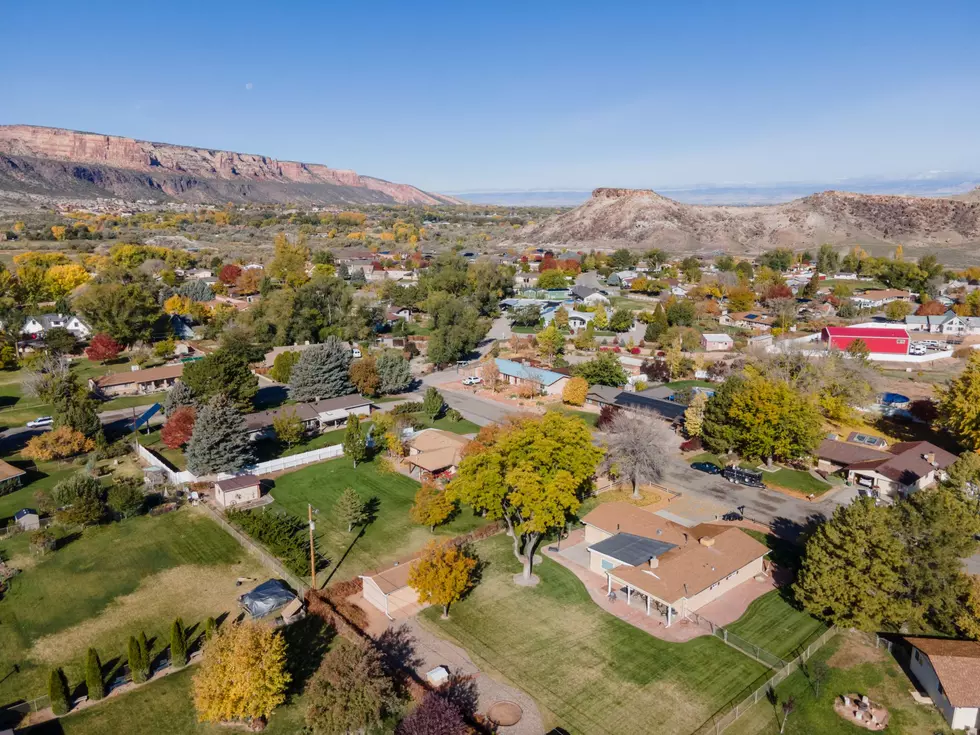
Kentucky bluegrass is not from Kentucky. It's from Europe and northern Asia.
It ended up in the American West because homebuilders in the mid-20th century decided that a lawn should look like a lawn, regardless of the 10 inches of annual precipitation that Grand Junction actually gets.
Only 25%, or even less, of water applied to lawns returns to streams and rivers, compared with 95% of water used indoors. You are not cycling that water back into the system. You are evaporating it into the sky over a plant that has no business being here.
The city has already figured this out, at least for new construction. Grand Junction's regulations now limit turf that doesn't qualify as "functional" to 15% of landscaping in new developments.
The parks department is already letting grass grow longer to retain moisture and converting low-traffic areas to drought-tolerant landscaping because they know they can't keep up. The math is the math.
Read More: Look: Is the Colorado River Shrinking Around Grand Junction?
The Golf Course Problem Has No Clean Answer

Here's where it gets genuinely complicated. Golf courses use a lot of water. That's not a debatable point.
But Tiara Rado, Redlands Mesa, and Adobe Creek are also jobs, tee times, tourism, and the reason a certain slice of Grand Junction residents feel like they have somewhere to go on a Saturday morning.
Telling a groundskeeper to let the fairways go brown is telling someone to lose their livelihood. That's real. The recreation question is real.
And it sits right next to the equally real fact that in places like the Grand Valley, there may simply not be enough water to satisfy all rights this year. Not "barely enough." Not enough.
Nobody's going to give you a clean answer on this one, because there isn't one.
What Happens If We Don't
The Colorado River has been in a persistent hot drought for 26 years, and unprecedented heat is rapidly evaporating this year's record-low snowpack.
All five proposed federal plans for managing Lake Powell and Lake Mead after the current guidelines expire this fall have been modeled against extreme drought scenarios. Every single one of them would fail under current conditions.
The state activated Phase 2 of its Drought Response Plan in March. Colorado's state climatologist said the damage to the water supply is already done, and major reservoirs are going to take large hits this year regardless of what happens with monsoons.
Your lawn will grow back. The river doesn't work that way.
The Colorado River Starts High in the Rocky Mountains
What is the Longest River in Colorado?
Gallery Credit: Wes Adams